
Family-owned · Bellevue Local
Lawn Leveling for a Smooth, Even Yard
Veteran-owned, available 7 days a week, with 42 five-star Google reviews backing every job.
Free estimate
Tell us what you need
Three fields. It reaches a person here, not a call centre.
What Lawn Leveling Actually Fixes
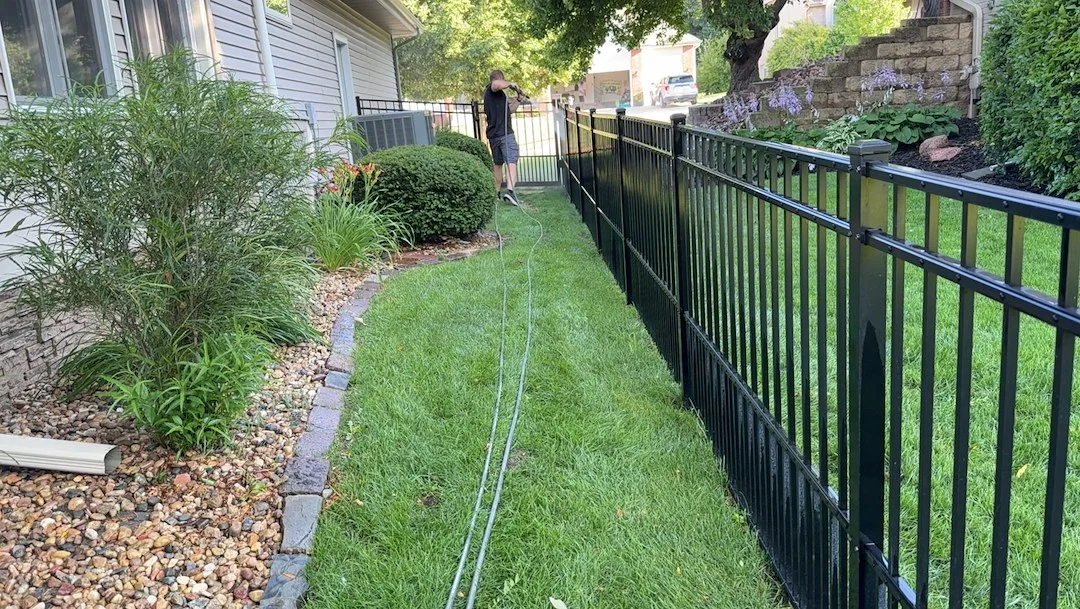
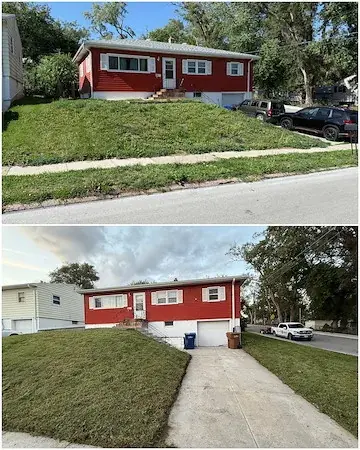
Lawn leveling fills low spots and smooths bumps with a sand and soil topdressing so the yard mows evenly and drains properly. Frontline Home Services levels lawns in Papillion, Bellevue and across the Omaha metro. An uneven lawn isn't just an eyesore. Low spots collect standing water after every rain, high spots dry out in summer heat, and the whole yard becomes a tripping hazard for kids and a headache to mow. Lawn leveling corrects those grade problems at the soil level, so water drains where it should and your turf grows evenly instead of in patches. Andy Simmons at Frontline Home Services has handled this work across the Omaha metro and pairs it with lawn mowing and maintenance to keep yards looking sharp after the grade is set. Call (402) 218-0676 for a straight answer on what your yard needs.
The right approach depends on how severe the problem is. Minor low spots can be top-dressed with a mix of sand, soil, and compost, worked in without disturbing the existing turf. Severely uneven areas sometimes require pulling sod, regrading the subsoil, and re-laying or reseeding. Nebraska clay soil compacts hard and doesn't self-correct, so waiting usually makes the problem worse, not better. Cost depends on yard size, depth of correction needed, and whether re-seeding is part of the scope. Every job is different -- contact Frontline Home Services for an accurate estimate.
Call (402) 218-0676Why Nebraska Yards Go Uneven
Freeze-Thaw Heaving
Ground freezes, expands, and thaws unevenly through a Nebraska winter. That cycle pushes soil up in some spots and leaves depressions in others. One bad winter can undo years of a flat lawn.
Poor Original Grading
Many homes were graded for drainage at build time but the soil settled unevenly over years. Water starts pooling near foundations or in the middle of the yard instead of running off at the edges.
Tree Roots and Stumps
Old stumps decompose underground and leave a sinking void. Tree roots push up and then die back, leaving channels and humps that no amount of mowing will smooth out.
Burrowing Animals
Moles and voles work through Omaha-area lawns fast. Their tunnels collapse and leave soft, uneven patches that trip people and tear up mower decks.
Heavy Foot or Equipment Traffic
Construction vehicles, heavy lawn equipment, or even years of kids playing in the same path compacts and depresses soil. The ruts don't fill themselves.
How It Works
The Leveling Process, Step by Step
Rushing this job is how you end up with a lawn that looks patchy for a full season. Here's how Andy approaches it.
Assessment and Marking
Walk the yard, identify every low spot and high point, mark drainage patterns. This step determines whether the fix is a top-dress job or a full regrade -- and that decision changes the scope entirely.
Grading and Fill
Low areas get filled with the right mix for Nebraska soil conditions. Minor spots get top-dressing. Severe areas may need sod lifted, subsoil corrected, and sod reset so the grass survives.
Seed, Water, and Finish
Disturbed areas get seeded and the yard is left with proper slope for drainage. Follow-up lawn mowing keeps the new growth even while the seed establishes.
What to Expect
Honest Answers on DIY vs. Hiring It Out
What Good Leveling Looks Like When It's Done
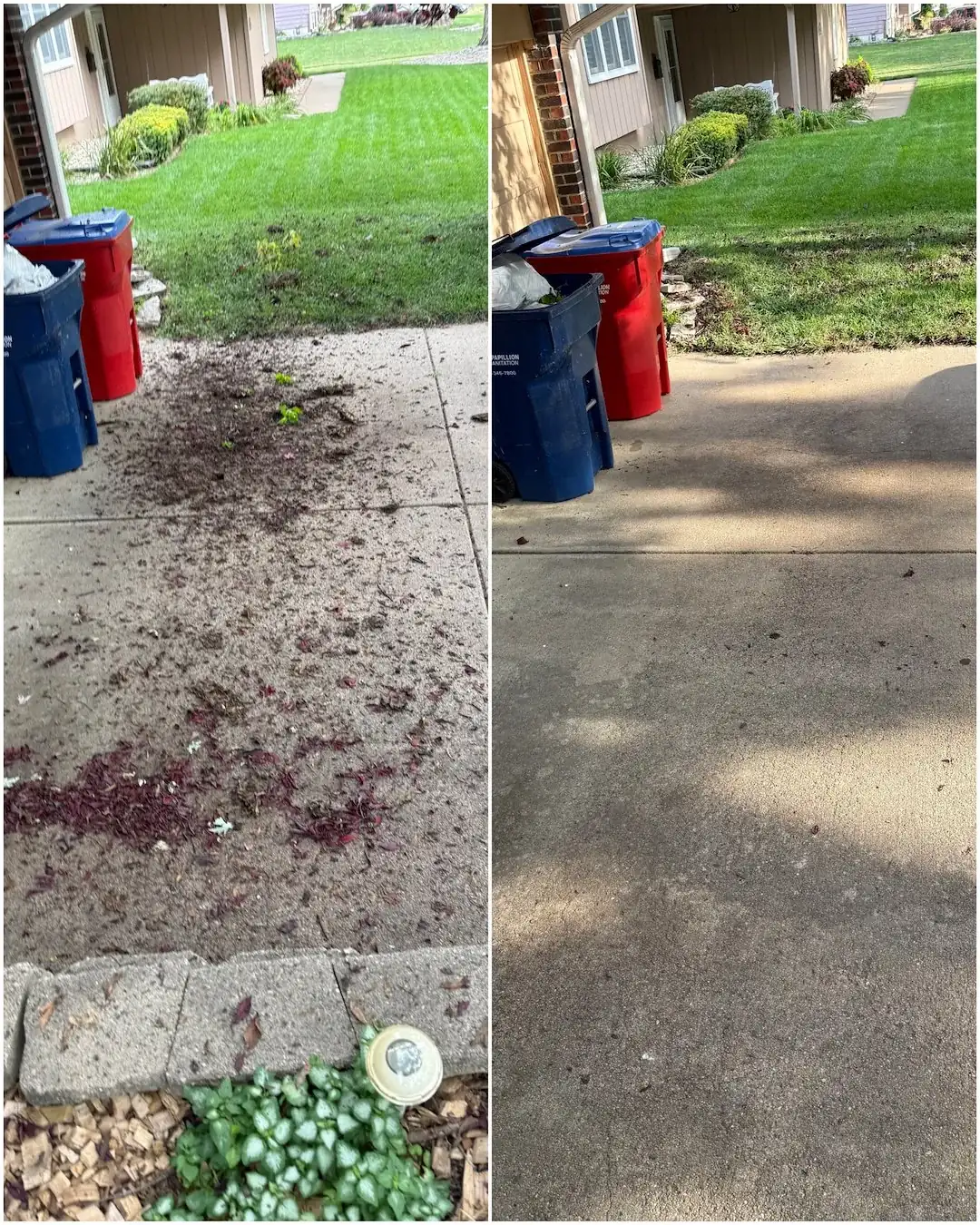
These are the outcomes that tell you the job was done right, not just done.
- 01
Water runs off, not across
After a rain, water moves toward the yard's edge and into drainage, not toward the house or into a standing pool mid-lawn.
- 02
Mower deck stays level
You can run a mower across the yard in any direction without the deck dipping into a low spot or scalping a high one.
- 03
No soft zones underfoot
Walking the yard shouldn't feel spongy in some spots and hard in others. Even firmness means the fill is settled and the grade is consistent.
- 04
Grass grows in uniformly
Once seed establishes -- typically 2 to 4 weeks -- new growth matches the surrounding turf density and color. Patchy regrowth usually signals a fill mix or soil pH problem.
Pair Leveling with Mulch for Full Curb Appeal
Frontline Home Services: The Facts
Veteran-owned, Omaha metro's choice for exterior home services.
- 5.0 stars across 42 Google reviews Every review is real, every name is public.
- BBB Accredited Business Verified credibility, not just a claim.
- Veteran-owned and operated Andy served. He brings that work ethic to every yard.
- Available 7 days a week Call any day -- someone will pick up.
Lawn Leveling Questions, Answered Straight
How can I level my lawn without killing the grass?
How do you flatten a very uneven lawn with major high and low areas?
What is the best material to use when leveling ground under grass?
When is the best time of year to level a lawn in Nebraska?
Does lawn leveling help with water pooling near my foundation?
How long does it take for grass to recover after leveling?
Get started
Ready for a Level Lawn That Drains Right?
Call Andy at Frontline Home Services and get a straight answer on what your yard actually needs.
No upsell, no pressure. If it's a job you can do yourself, we'll tell you. If it needs professional correction, we'll scope it honestly and get it done. (402) 218-0676
5.0 from 42 Google reviews