
Family-owned · Bellevue Local
How to Keep Your Lawn Green During Hot Nebraska Summers
A practical guide for Bellevue homeowners keeping cool-season grass alive through July and August.
Free estimate
Tell us what you need
Three fields. It reaches a person here, not a call centre.
Why Nebraska Summer Heat Is Hard on Grass
When July air sits heavy over the Platte and south winds race up the river valley, Bellevue lawns feel it. Heat, wind, and long daylight hours push cool-season grasses to their limit. Kentucky bluegrass, perennial ryegrass, and tall fescue all thrive in our spring and fall seasons, but summer is when they need real management, not guesswork. With a plan built for our climate, your yard can hold rich color from Olde Towne to Fontenelle Hills.
This guide covers what we see on Sarpy County lawns every summer: why grass fades, what to do about it, and how to read the signs before color drops. If you'd rather hand this off, our lawn mowing and lawn care services include mid-season checkups built around exactly these principles.
Call (402) 218-0676The Science
Why Nebraska Heat Dries Out Lawns
Cool-season grasses are not designed to thrive in 95-degree air, but they can survive it with the right support.
Watering Schedules That Work in Bellevue
Timing and depth matter more than total minutes on the clock.
Mowing
Mowing Heights and Summer Maintenance
Drought-Resistant Strategies for Midwest Yards
Shaded Areas
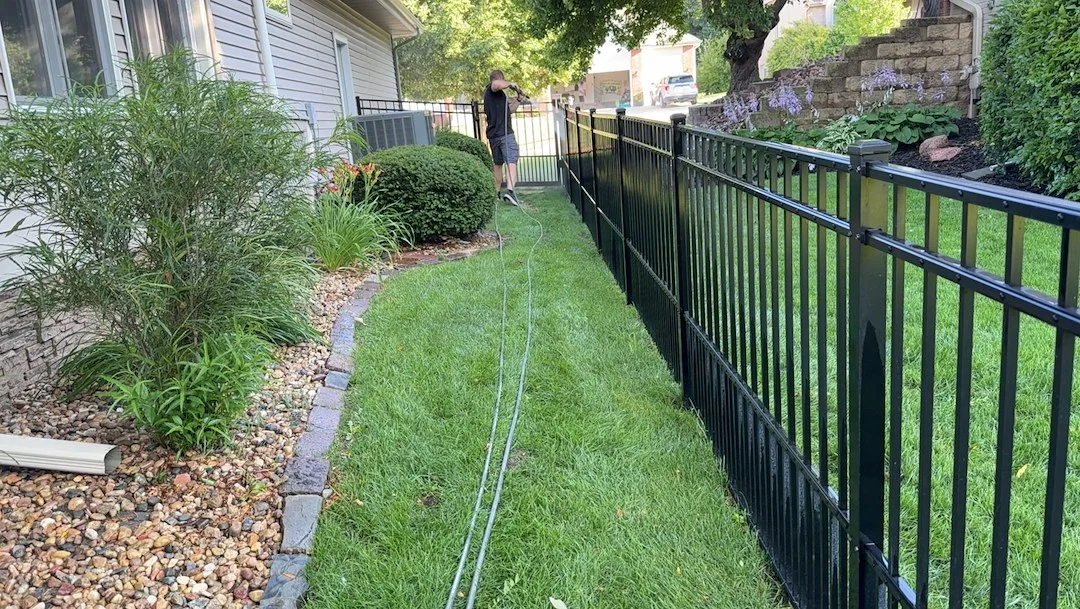
Adjust irrigation under tree canopies, surface roots compete for water and canopy intercepts rainfall. Manage leaf litter to reduce microclimate extremes.
Sloped Yards
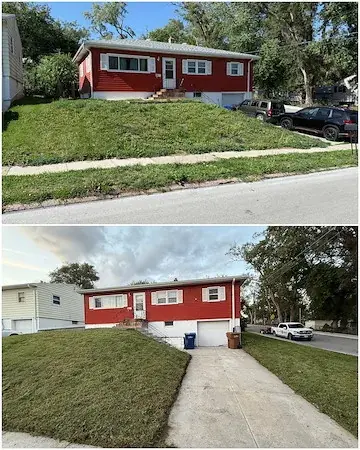
Run shorter, repeated irrigation passes on hillsides near the bluffs. Cycle-and-soak prevents the runoff lines and dry bands that appear mid-summer on slopes.
Compacted Patches
Compaction stops water at the surface. Targeted cultural fixes open the soil so water reaches root depth instead of pooling and evaporating.
High-Traffic Zones
Foot traffic concentrates stress. Flag problem areas early and apply wetting agents to hydrophobic soil before patches turn permanent.
Warning Signs
Reading the Lawn: Signs It Needs Help
Each neighborhood in Bellevue has its own microclimate, knowing what to look for changes how fast you can respond.
- 01
Footprints linger after crossing the lawn
Low turgor pressure means the grass blade lacks the water it needs to spring back. This is one of the earliest dehydration signals.
- 02
Blades go bluish-gray by afternoon
Grass curls and shifts color as a defense against heat. If it recovers by morning but repeats the cycle, irrigation timing or depth needs adjustment.
- 03
Dry spots persist despite watering
Localized pale patches that don't respond to irrigation usually indicate compaction or hydrophobic soil, neither of which resolves with more water alone.
- 04
Irregular patches that don't match drought patterns
Circular or irregular patches that spread over days may signal disease or grub activity. These need a different response than a watering adjustment.
Neighborhood and Soil Notes Around Bellevue
Why Tall Fescue Blends Shine in Summer
Our Process
How We Set Watering Windows and Zones
Uniform coverage matters as much as total run time. Dry arcs from clogged nozzles or misaligned heads mean sections of the lawn receive half the water others do, and those sections show it by early August. We check for coverage gaps and correct them so the entire yard receives a consistent dose. On clay-loam, split cycles get water to 4 to 6 inches where it helps roots most. Each zone gets a shorter initial run, a pause for absorption, then a second pass. The result is even distribution without pooling or runoff, and it's the difference between patchy green and a smooth, consistent lawn through the hottest weeks. Wind and heat events over the Missouri can shift how fast soil dries. We track those patterns and adjust schedules tighter or looser accordingly rather than running the same program from Memorial Day through Labor Day regardless of conditions.
Check for Coverage Gaps
Inspect nozzles and head alignment before summer heat peaks. Dry arcs from misaligned heads compound quickly once temperatures climb above 90.
Run Cycle-and-Soak on Problem Areas
Short runs, a pause for absorption, then a second pass. This reaches 4 to 6 inches on clay-loam without triggering runoff or surface pooling.
Adjust for Wind and Heat Events
A schedule set in June often needs tightening by late July. Track conditions and revise, don't run the same program all summer and expect consistent results.
Our Service
Our Pro Summer Plan for Consistent Color
If your yard needs a steadier plan in July and August, here is what a managed summer program looks like on Bellevue properties.
- 01
Irrigation Management
Pre-dawn windows. Cycle-and-soak on clay and slopes. Zone-by-zone adjustments when heat or wind shifts soil-moisture availability mid-week.
- 02
Mowing and Soil Feeding
Higher blade height, sharp cuts, and mulched clippings returned to the lawn. No bagging in summer, clippings cool the surface and feed the microbiome.
- 03
Monitoring and Response
Ongoing checks for disease, insects, and heat stress. Light fertility timed for absorption, not top growth. Wetting agents applied to persistent dry spots before they spread.
Get started
Ready to Hand This Off?
Frontline Home Services is veteran-owned and based in Bellevue. We're available seven days a week.
Ask about our mid-season checkups and adjustments, part of our summer lawn mowing and maintenance program for Bellevue properties. While you're at it, summer is also a good time to get ahead of exterior cleaning before fall. We handle power washing and gutter cleaning seven days a week across the Omaha metro. One call covers the whole exterior.
5.0 from 42 Google reviews