
Family-owned · Bellevue Local
What Nebraska Winters Do to Your Exterior
Snow is the obvious part, salt film, freeze-thaw cracks, and spring algae are what linger.
Free estimate
Tell us what you need
Three fields. It reaches a person here, not a call centre.
The Winter Combo That Wears Down Siding
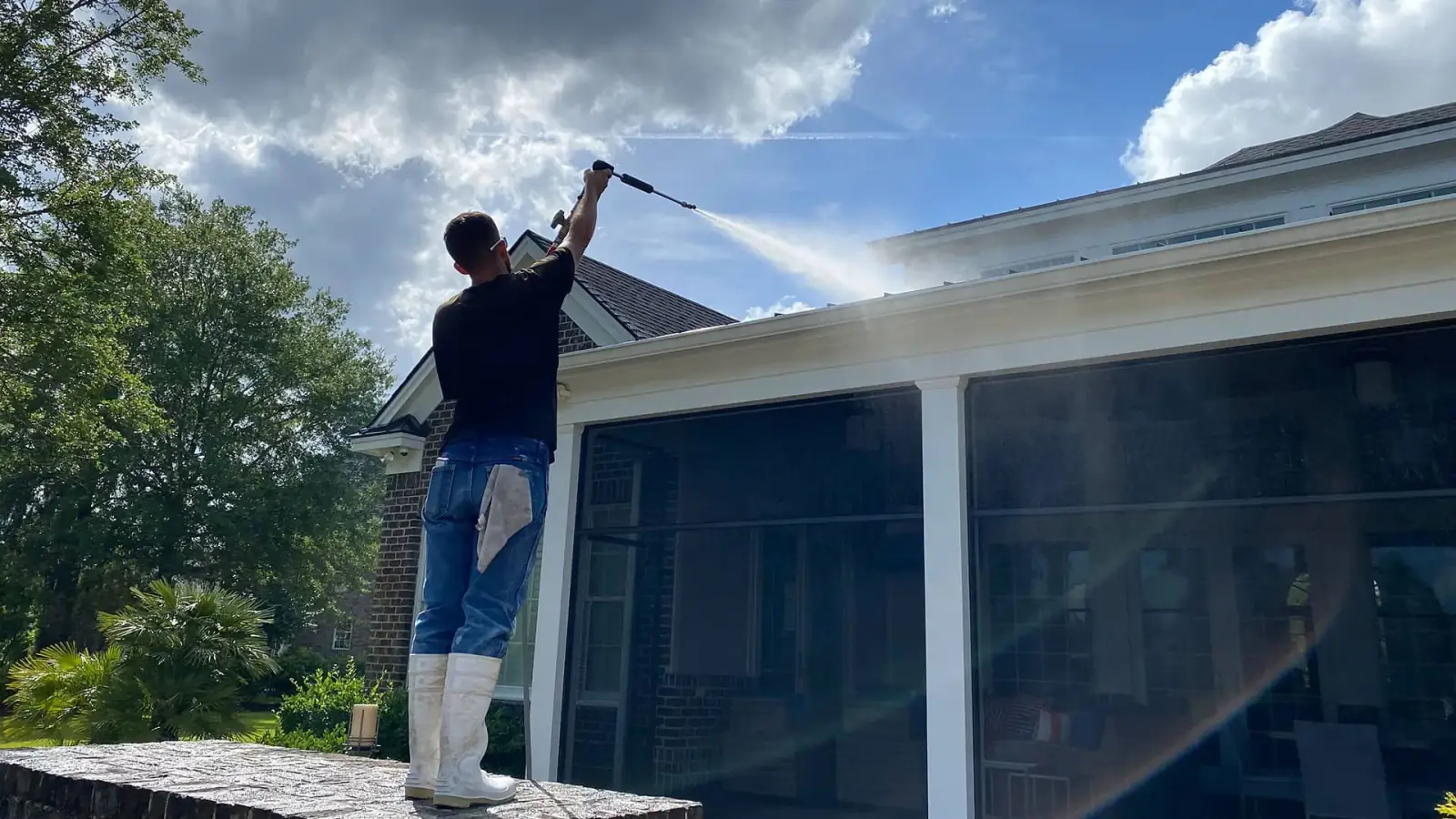
Nebraska winters don't just bring snow. They leave behind a gritty mix of salt, slush, and wind-driven debris that wears down paint, stains siding, and feeds spring algae. At Frontline Home Services, we run house washing calls across Bellevue, Papillion, and La Vista every spring, and the pattern is the same every year: winter weakens your exterior, then warmer days reveal the streaks and growth.
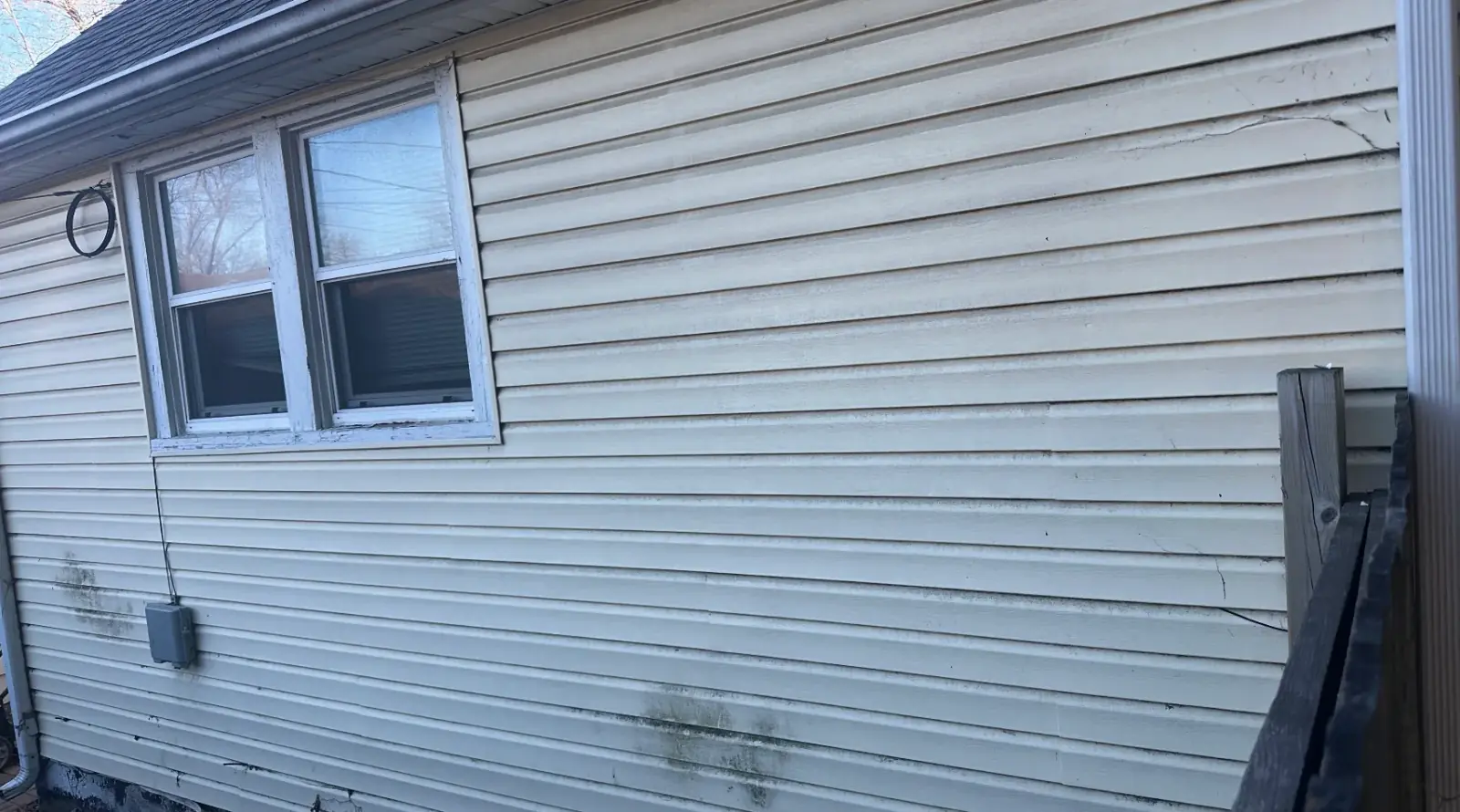
Most of it is invisible until temperatures climb. That's when the chalky haze on vinyl, the black streaks along the north wall, and the rust-colored drip lines under your gutters all come into focus at once. Knowing what caused each one helps you deal with it the right way.
Call (402) 218-0676Freeze–Thaw, Salt, and Stains: What's Really Happening
What to Look For
Common Signs Winter Has Hurt Your Exterior
- 01
Chalky residue on paint or vinyl
Salt and mineral deposits left by snowmelt dry to a powdery haze. It wipes off in patches but bonds again when wet.
- 02
Green or black streaks on shaded walls
North-facing and shaded surfaces stay damp longest. That moisture feeds algae and mildew, which show up as dark vertical streaks by late winter.
- 03
White crust near the ground
Efflorescence, salt pulled out of brick and concrete by repeated freeze-thaw cycles, leaves a white or gray crust along foundation lines.
- 04
Drip lines and tiger stripes
Tannins from roof debris and oxidation from gutters run down siding every time it rains or melts. The streaks are harmless at first, but they set permanently if left through another summer.
Why Timing Matters for Spring Washing
The Full Scope
What a Professional House Wash Actually Covers
Siding and trim
The largest surface area and the first place salt film and algae take hold. Soft washing clears both without scratching vinyl or lifting paint.
Soffits and fascia
Tucked under the roofline, these surfaces trap moisture and organic debris. Algae and mildew thrive in the shade they provide.
Porch ceilings and posts
Tiger striping on posts and mildew on porch ceilings are among the most visible winter leftovers. They clean up quickly with the right dwell time.
Foundation and lower walls
Road salt and efflorescence concentrate here. A targeted rinse after chemical treatment clears the crust without damaging brick or mortar joints.
Window sills and drip edges
Mineral deposits and drip lines under fixtures set fastest on horizontal surfaces. Clearing them in spring prevents permanent staining.
Gutters
Tiger stripes on aluminum gutters are oxidation, not dirt. A soft wash with the right detergent lifts them without abrading the finish. Pair this with a gutter cleaning if debris has built up over winter.
Our Process
How House Washing Protects Your Home After Winter
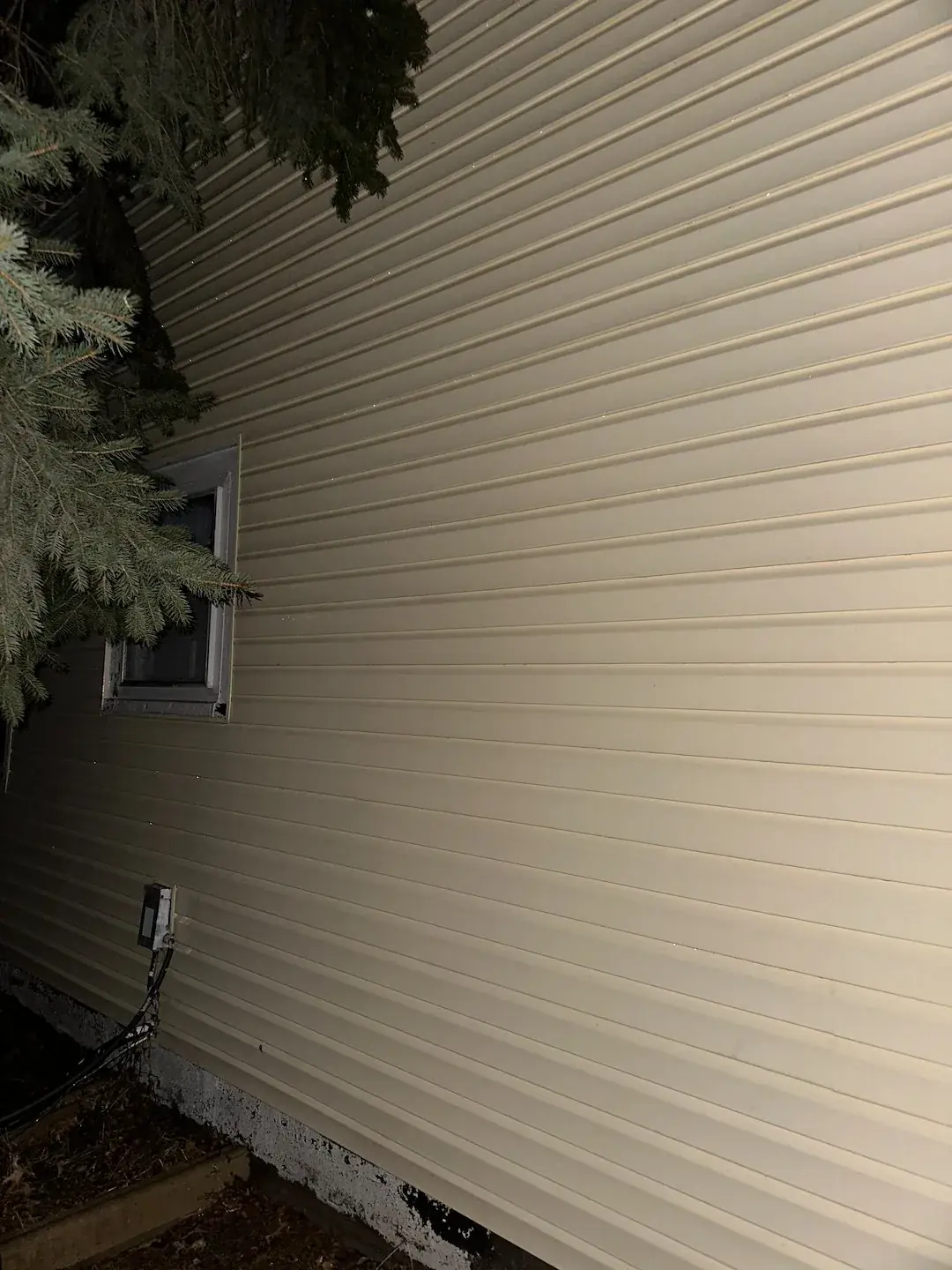
A soft wash in spring does more than restore curb appeal. It removes the residue that causes ongoing damage and prepares surfaces for any repair or painting work ahead.
Remove what winter left behind
Salt haze, soot, road film, and sticky organic debris, all broken down and rinsed clear at low pressure so nothing is forced into the siding.
Neutralize algae and mildew at the source
The cleaning solution kills spores before warm, humid days activate them. Surfaces stay cleaner longer than a plain water rinse would achieve.
Set surfaces up for paint and caulk
Clean, contaminant-free surfaces hold paint and caulk adhesion significantly longer. Washing first is the prep step most homeowners skip, and it's why touch-up work peels prematurely.
Local Factors That Speed Up Buildup in the Omaha Metro
Get started
Ready to Clear the Winter Damage?
Frontline Home Services runs exterior cleaning calls across Bellevue, Papillion, La Vista, and the wider Omaha metro, seven days a week, veteran-owned and operated.
Call Andy at (402) 218-0676 to schedule your spring house wash. If you'd like to see what we've done for other homes in the area, take a look at our recent project photos or contact us to request a quote.
5.0 from 42 Google reviews